

You’ll need to evaluate companies on an ongoing basis (stay current with earnings reports), and periodically review your portfolio to ensure it continues to reflect your goals. If you enjoy researching companies, following business news, and making your own decisions about where to put your money, then managing your own stock portfolio is likely a good fit. The honest answer is that both approaches can work well (and the right choice depends on your personality), available time, and level of interest. When done correctly, investing in stocks is one of the most effective ways to build long-term wealth.
Even buy-and-hold investors should have a plan for how they’ll eventually start selling their holdings in retirement trading demo account . It is easy to get addicted to watching the investments move. You can buy right now at the offer – called a market order – and get into that trade as there is someone willing to sell to you at that price. Depositing funds is required to start investing. For most (this will be diversified index funds), typically tracking the S&P 500, FTSE 100, Nasdaq 100, or popular indexes from other countries.
Picking which individual company to back (when to buy), and when to hold requires a different skill set to passive index investing. They have also experienced individual drawdowns of 40% to 75% at various points, requiring investors to hold through severe short-term pain to realise those long-term gains. Many beginners start with an S&P 500 ETF for simplicity and add a global ETF over time as their confidence and portfolio grow.
A corporation might artificially increase its return on equity by repurchasing its own stock to lower the shareholder equity denominator. How much profit a firm makes on each dollar invested by shareholders is revealed by the return on equity (ROE), which is expressed in percentage terms. You should also take into account that the P/E ratio is determined from the possibly incorrect computation of earnings per share and that analysts’ predictions can occasionally be short-sighted. If you want to know how much investors are willing to pay for a dollar of a company’s current earnings, you may use this stock valuation metric. Earnings per share or EPS are calculated by dividing earnings by the number of shares available for trading. In order to get started with your research, you should look at the company’s financials.
Step 3: Understand Your Risk Tolerance and Choose Your Investing Approach
When you’re just learning how to invest in stocks, knowing what not to do is every bit as important. It’s the most exciting part of learning how to invest in stocks, but the sheer number of options can feel like drinking from a firehose. Learn how to invest in stocks for beginners with this guide. A dividend is a portion of a company’s earnings paid out to its shareholders, typically on a quarterly, semi-annual, or annual basis. With the right knowledge and guidance — anyone can learn how to invest in stocks – and even grow their wealth. When you’re new to finance and want to learn how to invest in stocks in the US — this can be daunting and sometimes confusing.
If you are wondering how to invest in the stock market for beginners — you are not alone. Now that you know why investing matters, let’s get you started on the right path. Once a Grand Canyon river guide earning $4,000 a year, I learned the principles of value investing from a mentor and transformed my life. At Rule #1 Investing (we believe that anyone), yes, anyone, can learn to invest successfully. Everything is built for beginners — no financial jargon, no judgment, no assumption you already know what you are doing. The quiz (your personality result), and basic dashboard access are completely free.
People Also Ask
Learn how the stock market works, how to invest and about different markets. Anyone 18 years or older can invest in stocks with J.P. There are a few ways to invest in stocks with J.P.

Steve Quirk (chief brokerage officer at Robinhood Markets), says, “don’t be intimidated by the markets—you don’t have to know everything.” The earlier you start investing — the more time you’ll have to let compound growth help build your wealth. A savings account gives you easy access to your money with little risk, but it also offers lower rewards. Diversification may not protect your portfolio against market risk or loss of principal, but it can help investors navigate fast-changing markets and stay the course to pursue their financial goals. Many platforms have low minimums (and simple setup processes so you can establish recurring investments into various assets), including ETFs, and you can start with as little as $1 when you buy fractional shares. Conversely, if a stock struggles to move above a certain price—called a “resistance level”—investors may view that level as a ceiling the stock will struggle to break through.
Many investors overestimate their risk tolerance during calm markets and underestimate it during market downturns. Your ability to take risks depends on income stability, savings, debt levels, time horizon, and future cash needs. This may include a home purchase, business expense, tuition payment, or a major planned purchase. Before you begin investing in stocks — make sure your financial foundation is stable.
Automated investing can help remove the guesswork and emotions that can get in the way of good decision making, and may alleviate concern that you need to constantly watch the markets. These low-cost vehicles may be easy ways for investors to maximize their “time in the market,” which plays a vital role toward long-term success. Certain ETFs make it fast and easy to invest across a diversified portfolio of stocks and bonds, which may make it easier to make investment decisions.
- Phil’s goal is to help you learn how to invest and achieve financial independence.
- Even if the market falls soon after investing, you’ll have plenty of time to make up those losses.
- Understanding these basics is your first step towards confidently deciding to invest in stocks.
- A couple of hundred dollars is often sufficient to purchase a share of an S&P 500 ETF, providing you with similar diversification as an investor with millions.
- The stock market can be unpredictable, and you don’t want to be forced to sell your investments at a loss because you suddenly need cash.
- You might purchase one or two shares of a certain business to gain exposure to the stock market.
According to Charlene Young (a senior pensions and savings expert at AJ Bell), today’s new investors benefit from the opportunity to learn from others’ past mistakes without incurring the costs themselves. To begin (some platforms might require a minimum investment amount), either as a monthly payment or a one-time lump sum. After setting up your investment account or stocks and shares ISA with your selected provider — you can invest in the funds, stocks, and trusts you prefer.
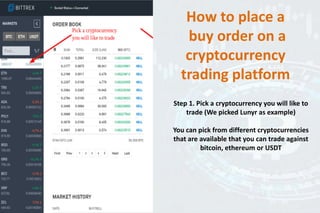
- Nowadays (the process is simple and direct), though it may require a few days.
- As a beginner, you will most frequently come across these types of investments.
- Then (think about how you’ll implement them), creating your own personalised investment approach.
- A focus on stocks that offer regular cash payouts to shareholders defines the strategy of dividend investing.
- The S&P 500 index fund, for example, holds shares of the 500 largest U.S. companies.
Decide how much to invest
Consider it similar to mastering cooking; you start with easy recipes (and as your skills improve), you explore new techniques and ingredients. Key to achieving long-term success is staying informed and being willing to modify your strategy. The timing of your sales , or the decision to hold, is what truly matters in successful investing, not merely the purchases you make.
To diversify, invest in stocks and bonds across different industries and geographies. The stock market can be unfriendly to newcomers trying to learn how to invest. Easy-to-use tools, free research, and personalized guidance mean you never have to face the markets on your own. Stocks are available for companies in a wide variety of industries, so you can tap into your knowledge of specific businesses.